Carpenter Bees, Wasps and Honey Bees: Which Ones Need Treatment
Not every buzzing insect around your house is a pest, but a few of them are drilling into your trim.
October 26, 2026 · 4 min read
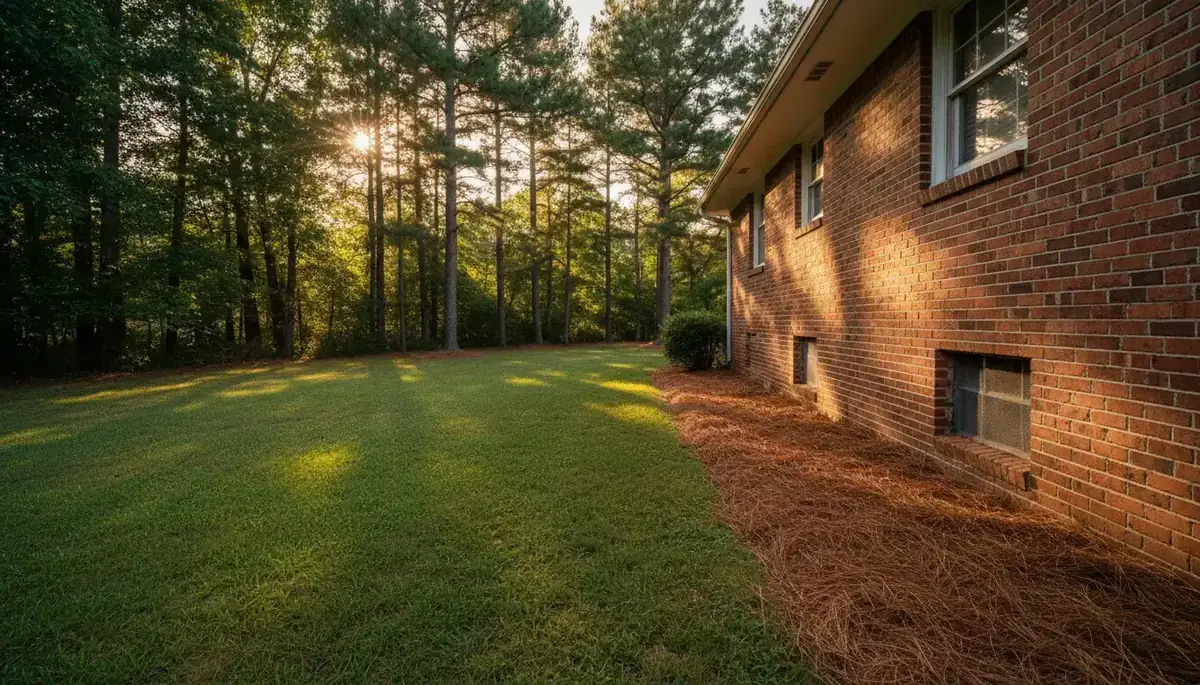
By late October most flying insects have wound down, which makes this a good time to look at what they left behind. Homeowners tend to lump bees and wasps together, but they aren't the same, and the right response differs. Some need treatment, some need a beekeeper, and some just need you to stay out of the way. Here's how to tell them apart.
Carpenter bees: the ones that drill
Carpenter bees look a lot like bumblebees at a glance. The easy check is the abdomen. A bumblebee's is fuzzy and striped with yellow, while a carpenter bee's is bare, shiny and black. They go after unpainted, weathered or softer wood: fascia boards, eaves, deck rails, porch posts, wooden siding and the trim around windows.
The giveaway is a round hole in the wood, roughly the width of your finger, with a little pile of coarse sawdust on the ground or deck below. Carpenter bees don't eat wood. They tunnel into it to make a nest and lay eggs, and inside the hole the tunnel turns and runs along the grain. One hole is a nuisance. The same boards reused year after year get honeycombed, and woodpeckers sometimes show up to dig out the larvae, which can make a mess of the board.
Whitco's Henderson pest control page lists bees, specifically carpenter bees, among the pests the company treats, alongside wasps, cockroaches, rodents, crickets and earwigs.
A note on the hovering
The large bee that hovers in front of you near the eaves, sometimes darting at your head, is usually a male. He's showing off and can't sting. Females can sting but rarely do unless handled. That helps explain why carpenter bees look scarier than they are, but the damage to the wood is still real.
Wasps: the ones that sting
Wasps are a different conversation. Paper wasps build the open, umbrella-shaped nests you see under eaves, porch ceilings and deck rails. Yellowjackets often nest in the ground or inside a wall void, and mud daubers plaster tube-shaped mud nests onto sheltered surfaces. By late summer and early fall a colony is at its largest, which is also when people get stung mowing, trimming hedges or hanging a porch light. The first hard freezes wind most colonies down, but sheltered spots near the house can hold overwintering queens.
If anyone in your household is allergic to stings, treat a nest near a door, a play area or a walkway as urgent and leave it to a professional. Even if nobody is allergic, spraying a large nest at midday from a ladder is how most wasp stings happen.
Honey bees: handle with a different plan
Honey bees are pollinators, fuzzy and golden brown, and they behave differently. A swarm hanging in a bush is usually a colony in transit looking for a place to live, and it often moves on within a day or two. A colony inside a wall or a hollow tree is a different matter, and it is a job for a local beekeeper, many of whom will remove bees rather than destroy them. If you can't tell what you've got, take a photo from a safe distance.
Whitco's own Henderson page puts it plainly: they're big fans of honey bees because of their environmental benefits, and it's carpenter bees, drilling into the wood of a house, that pose the different threat. If honey bees have moved into a wall, call and describe what you're seeing, and ask what a technician can do for your situation and what is better handed to a beekeeper.
What helps with carpenter bees
- Look for round holes and sawdust now, and check the underside of rails and eaves where they like to work. Adults often spend the winter in old tunnels and come back to the same boards in spring.
- Paint or stain exposed wood. Bees prefer bare, weathered boards.
- Have holes treated first and plugged afterward. Sealing a hole with a live bee inside doesn't solve much.
- Replace boards that are badly hollowed out, since they're no longer structural.
When to call
Call about a carpenter bee problem when you see repeated holes, especially in the same boards year after year, or when the damage starts to show on the fascia and deck. Call about wasps when a nest is within a few feet of where people walk, sit or play. Call about honey bees when you aren't sure what you're looking at, and describe what you see.
Whitco covers Henderson, Oxford, Louisburg, Wake Forest, Creedmoor, Durham and the towns in between. The pest control page at /services/pest-control lists what the company treats, and the number to call is (252) 492-2818, Monday through Friday, 8 to 5. Estimates are free with no obligation, so a photo and a quick description are a fine place to start.
Whitco Bug Warriors, (252) 492-2818
Call (252) 492-2818More articles
Mud Tubes on Your Foundation: What They Mean and What an Inspection Looks For
A pencil-wide line of dried dirt on the foundation is worth stopping for, and worth photographing before you touch it.
A Wet Crawl Space and Termites Are Usually the Same Problem
Termites and rot fungi want the same thing from your house: damp wood. Fix one without the other and you've only solved half.