A Wet Crawl Space and Termites Are Usually the Same Problem
Termites and rot fungi want the same thing from your house: damp wood. Fix one without the other and you've only solved half.
October 26, 2026 · 4 min read
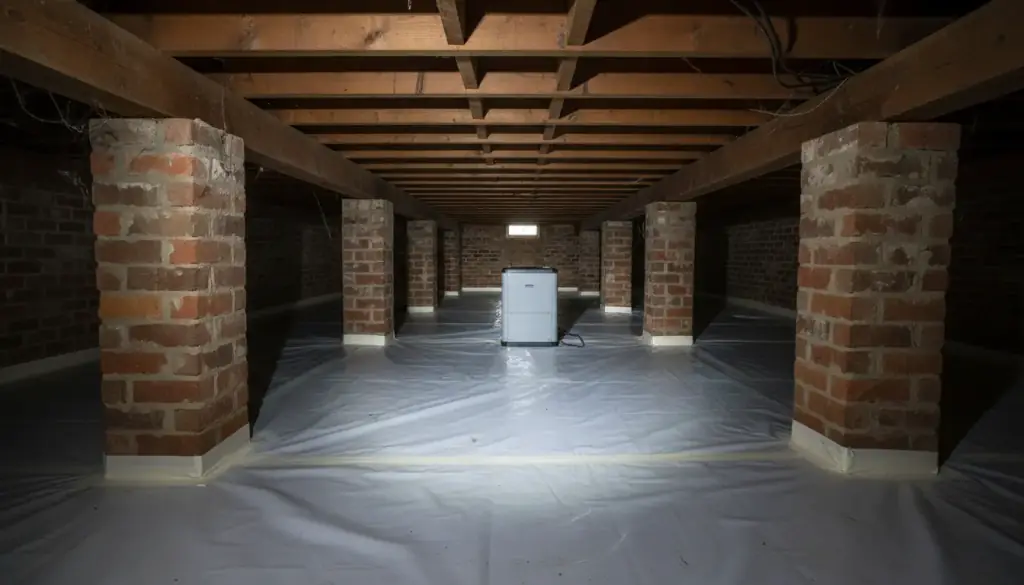
Ask ten homeowners whether they have a termite problem or a moisture problem and most will pick one. In a crawl space the honest answer is often both, because the two feed each other. If you want to stop paying attention to what's under your floor, it helps to understand why.
Both of them are after damp wood
Subterranean termites need moisture to survive, which is why they build covered tunnels and keep one foot in the soil. Wood-destroying fungi, the stuff that makes timber soft and spongy, need moisture too. Whitco's moisture control page says it plainly: excess moisture feeds wood-destroying fungi and invites termites.
Damp wood is also easier to chew. A beam that has been quietly absorbing water for years is a much friendlier meal than a dry one. So a wet crawl space can set the table for termites, and a termite infestation can hide in wood that already has a rot problem, which makes the damage harder to read.
Why the Piedmont is hard on crawl spaces
Our summers are humid, and warm air carrying that humidity drifts into a cooler crawl space and condenses on cold surfaces like ductwork, pipes and framing. Red clay soil holds water and drains slowly, so after a stretch of rain the ground under a house can stay wet well after the yard looks dry. Add a downspout that empties beside the foundation and you've built a reliable source of water.
A twenty minute walk-around
You don't need special tools to spot early warning signs. Do this on a dry day, and if you aren't comfortable crawling under the house, do the outside half and leave the rest to a professional.
- Walk the outside of the house and check that every downspout carries water several feet away from the wall.
- Look at the grade. Soil should slope away from the foundation, not toward it.
- Check the outdoor spigots for drips, and look for green staining or a damp line on the brick below them.
- Look through the crawl space access or vent with a flashlight. Standing water, bare dark soil that looks wet, or a torn or missing vapor barrier is a sign of trouble.
- Notice the smell. A musty, earthy odor in the house, especially in summer, often traces back to the crawl space.
- Look for condensation or rust on ducts, and for insulation that has sagged or fallen.
- Press on the floor in the rooms above. A soft or springy spot deserves a closer look from below.
If you see mud tubes along with any of those, don't wait for a better time. The two problems are working together.
What moisture control involves
Whitco describes its moisture control work as reducing structural moisture using state-of-the-art tools and knowledge. What that means for your house depends on what the inspection finds. Sometimes the cause is outside, like grading or gutters. Sometimes it's the crawl space itself, such as an exposed soil floor, a failed barrier, or humidity that needs managing. A reputable company should tell you what it found, why it matters, and what each option does, in plain language, before you agree to a fix.
One customer on Whitco's reviews page, Oscar Dean, described the combination this way: “Termite protection and humidity control work done. Easy to deal with and did quality work.” It's a short review, but it matches the idea that the two jobs belong together.
Why fixing only one doesn't hold
Treat the termites and leave the crawl space wet, and the conditions that attracted them are still there, along with the fungus that was softening the wood in the first place. Dry out the crawl space and ignore the termites, and a colony that's already in the structure keeps eating.
That's the reason a good inspection looks at both at once. It's also why yearly termite inspections are worth keeping even after a treatment: conditions change, a gutter clogs, a pipe starts to weep, and the first sign is almost always something a trained eye can spot in minutes.
Before you change anything
It's tempting to close crawl space vents, lay plastic yourself, or run a dehumidifier down there and call it done. Some of those can help in the right setup and cause trouble in the wrong one. Ask what's recommended for your particular crawl space before you start.
To see how Whitco handles this, read the moisture control page at /services/moisture-control, then call (252) 492-2818 to set up a free, no-obligation estimate. The office is open Monday through Friday, 8 to 5, and it serves Henderson, Oxford, Louisburg, Wake Forest, Creedmoor, Durham and the towns around them.
Whitco Bug Warriors, (252) 492-2818
Call (252) 492-2818More articles
Mud Tubes on Your Foundation: What They Mean and What an Inspection Looks For
A pencil-wide line of dried dirt on the foundation is worth stopping for, and worth photographing before you touch it.
One-Time, Monthly or Quarterly: Choosing a Pest Control Plan
The right plan depends on the problem you have today and the one you want to avoid next year.